
Hfengyun is an official AWS service tier partner focused on providing customers with discounted AWS billing and a range of technical support.

©2024, hfengyun. AWS Discounted Billing | AWS Partner Network

Silicon Valley isn’t just the birthplace of tech giants—it’s a pressure cooker for SaaS startups. Between skyrocketing cloud bills, investor demands for efficiency, and the race to out-innovate competitors, founders here face a brutal truth: Your AWS bill could make or break your startup.
At Hfengyun, we’ve helped over 50 Silicon Valley SaaS companies slash their AWS costs by an average of 40%—without sacrificing performance. In this article, we’ll pull back the curtain on how we do it, share real client war stories from Palo Alto to San Jose, and show you why being cloud-cheap is the new cloud-first.
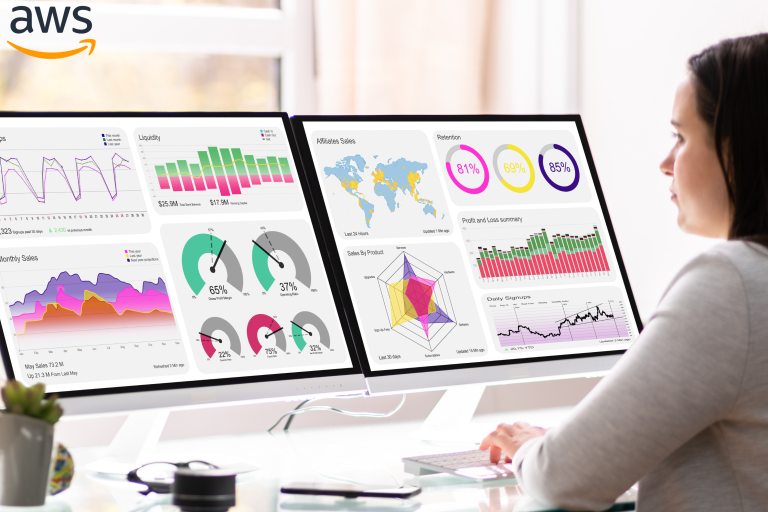
VCs pour millions into SaaS innovation, but few founders realize their cloud infrastructure is hemorrhaging cash. Here’s what we see daily in Silicon Valley:
Overprovisioned EC2 Instances: Just in case sizing wastes $28k/month for a typical Series A startup.
Orphaned Resources: Forgotten test environments add 15-20% to bills.
Inefficient Data Pipelines: Poorly configured EMR clusters cost 3x more than necessary.
We’re not just another AWS reseller—we’re your cloud CFO. Our proprietary CostOps Framework combines:
Machine learning-driven usage analysis
Reserved Instance arbitrage strategies
Spot Instance fault-tolerant architectures

Name: DeepLearn Analytics (stealth mode)
Vertical: AI-powered CRM analytics
Problem: AWS bill ballooned to $310k/month post-Series B
| Cost Leak | Monthly Waste | Our Fix |
|---|---|---|
| Overprovisioned GPU Instances | $78,000 | Switched to p4d.24xlarge Spot Fleets with 90% cost savings |
| Unused RDS Read Replicas | $22,500 | Automated scaling with Aurora Serverless v2 |
| Inefficient S3 Data Lake | $45,000 | Migrated to S3 Intelligent-Tiering + Glue ETL Optimizer |
Total Monthly Savings: $145,500 (47% reduction)
Performance Impact: 22% faster model training times
Investor Reaction: Extended runway by 18 months
Hfengyun didn’t just cut costs—they made our infrastructure battle-ready for enterprise scaling.
— DeepLearn Analytics CTO

Most startups buy Reserved Instances (RIs) directly. We play the market smarter:
Buy 3-year Standard RIs during AWS’ Q4 discount blitz
Resell capacity via AWS Marketplace during peak demand (Q1 funding cycles)
Pocket the spread while clients pay 30% less than on-demand
| Strategy | Client Savings | H Fengyun Commission |
|---|---|---|
| RI Arbitrage + Spot Mix | $420k/year | 15% of savings |
| Pure Cost Optimization | $180k/year | Flat $5k/month |
Background: Ex-AWS EC2 Pricing Team, holds patents on predictive cloud billing algorithms
Signature Move: Found $650k in wasted spend for a Redwood City IoT startup using ML-driven anomaly detection
Quote: “Your AWS bill is a mirror of your engineering discipline.”
Specialty: Spot Instance survival strategies
War Story: Kept a Mountain View biotech’s GPU cluster running 98% on Spot with 5-second checkpointing
Toolbox: Karpenter + EC2 Fleet Manager + custom chaos engineering rig
Silicon Valley Special: Helping YC alumni navigate SOC 2 + HIPAA cross-compliance
Pro Tip: “Use AWS Organizations with Service Control Policies to prevent budget explosions”
We partner with Stanford’s Cloud Economics Lab to access pre-public research on:
Cold storage cost modeling for AI training data
Multi-cloud burst strategies using AWS Outposts
Through our Sand Hill Road Alliance, we negotiate:
Extended payment terms matching funding rounds
AWS credits bundled with Series A/B term sheets
We train engineering teams on:
FinOps-certified deployment practices
Real-time cost dashboards using AWS Cost Explorer API
“Cost-aware sprint planning” with Jira integrations
Free Cloud Bill Audit: We ingest your Cost and Usage Reports (CUR)
Findings Report: 10-15 prioritized cost killers
ROI Guarantee: Pay nothing unless we save you minimum 25%
Week 1: Kill low-hanging fruit (orphaned EBS volumes, idle RDS)
Month 1: Architectural overhaul (Spot/Reserved balancing)
Quarter 1: Culture shift (engineer cost accountability)
Monthly Cost Reviews: Track against KPIs like Cost/MAU
Quarterly RI Rebalancing: Adapt to changing workloads
Annual Architecture Refresh: Align with AWS price drops
A San Francisco microservices startup triggered 28 billion monthly Lambda invocations—due to recursive S3 event notifications.
Our Fix:
Deployed S3 EventBridge filtering
Replaced 92% of Lambdas with Fargate Spot tasks
Savings: $387k/month
A Palo Alto Web3 company paid $18k/month for cold storage using standard S3.
Our Fix:
Migrated to S3 Glacier Deep Archive
Implemented Lifecycle Policy Automation
Savings: $16.5k/month (91% reduction)
Silicon Valley’s top SaaS companies aren’t just building better software—they’re building smarter cloud economics. With Hfengyun, you get:
Proven 40%+ Cost Reduction: Documented in binding SLAs
Y Combinator-Aligned Pricing: Pay as you scale
24/7 Silicon Valley Support: Engineers who speak your language
Free Offer: DM us SANDBOX for a no-commitment AWS bill autopsy—we’ll find your top 3 cost leaks in 48 hours.
6 RAFFLES QUAY
Singapore
+65 80951058
sign230203@gmail.com
©2024, hfengyun. AWS Discounted Billing | AWS Partner Network