
Hfengyun is an official AWS service tier partner focused on providing customers with discounted AWS billing and a range of technical support.

©2024, hfengyun. AWS Discounted Billing | AWS Partner Network
As a result, we have developed a full comparison of Snowflake and Azure. In this comparison, we will look at the important features of each system and emphasize the significant differences between them.

Selecting the appropriate cloud data platform for your firm is crucial for effective data management and analysis. These platforms play a critical role in laying the groundwork for data storage, processing, and analytics, which are required for data-driven decision-making.
Fortunately, two well-known solutions exist on the market: Snowflake and Azure. However, deciding between these two cloud data platforms can be a difficult undertaking.
As a result, we have developed a full comparison of Snowflake and Azure. In this comparison, we will look at the important features of each system and emphasize the significant differences between them. Our goal is to give you the knowledge you need to make informed decisions and select the finest cloud data platform for your specific business requirements. Whether you need scalable data warehousing, powerful analytics capabilities, or both, this comparison will help you understand these platforms and make the best decision for your organization’s data management and analytics requirements.
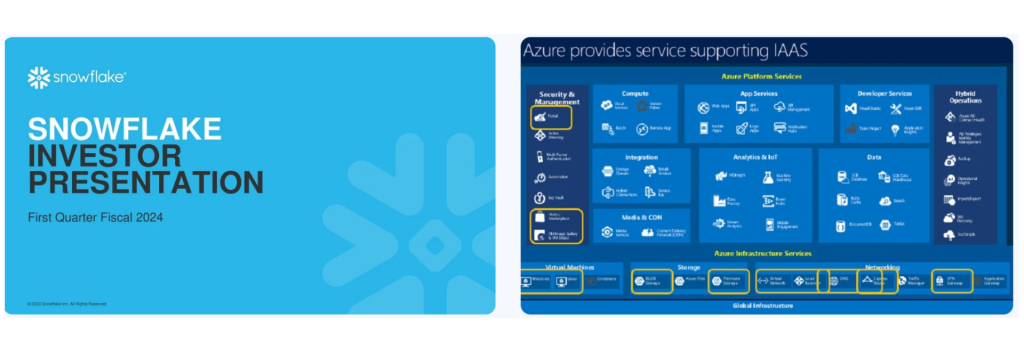
Snowflake and Azure are two cloud data platform competitors, each with a unique approach to data management and analytics.
Snowflake, with its scalable and cloud-native architecture, is an excellent alternative for enterprises seeking a modern and agile data warehouse solution. It excels in offering data warehouse capabilities that are simple to grow, manage, and integrate with a wide range of data sources. On the other hand, Azure provides a diverse set of data services to fulfill a variety of business requirements. Azure Synapse Analytics, formerly known as Azure SQL Data Warehouse, is an Azure ecosystem product that is well-known for its data warehousing and advanced analytics features.
Now, let’s look at how Snowflake compares to Azure so you can make an informed decision when selecting the best cloud data platform for your specific data management and analytics needs.
When comparing Snowflake with Azure, it is vital to understand the fundamental differences so that you can make an informed decision about your data management and analytics requirements. The primary distinction between these two cloud data platforms is their use cases and offerings.
Snowflake is well renowned for its impressive cloud-native data warehousing capabilities. It is intended to handle data storage, processing, and analytics in a scalable and flexible way. Snowflake excels at delivering a platform that can support a wide range of data workloads and use cases, making it ideal for enterprises wishing to update existing data infrastructures and capitalize on cloud analytics capabilities. The design scales effortlessly and allows for effective data sharing between users and partners.
Another significant distinction between Snowflake and Azure is their pricing models and offerings. Snowflake typically uses a pay-as-you-go model, allowing you to pay for the resources you use, whereas Azure provides a variety of pricing options, including pay-as-you-go, reserved instances, and enterprise agreements. The decision between the two is based on your budget and scalability requirements.
Flexibility: Snowflake is highly scalable, allowing you to simply extend compute resources to handle increasing data volumes and analytic workloads. This adaptability ensures that your system can meet increasing data demands.
Efficiency: Snowflake’s architecture separates storage and computing, resulting in better query performance and faster data processing. It also automatically optimizes and caches query results to speed up retrieval.
Simple to Use: Snowflake offers an easy SQL-based interface for data analysts and SQL users. It involves less setup and administration, which reduces the requirement for professional IT knowledge.
Safety: Snowflake prioritizes security, including data encryption, role-based access control, and audits to assure data confidentiality, integrity, and compliance.
Information Transfer: Snowflake allows for frictionless data sharing between businesses, departments, and partners without the need for complex ETL processes. This feature enables collaboration and data monetization potential.
Pricing: While Snowflake is scalable, it can be costly because you must pay for storage and computation resources. Costs can accumulate, particularly for large-scale data processing, necessitating careful budget management.
Supplier lock-in: Because Snowflake can only function on major cloud platforms like AWS, Azure, and GCP, you are locked into a certain cloud provider. This limits your ability to choose a cloud provider.
Complexity for complicated Use Cases: While Snowflake is easy to use, it may not be the best choice for more complicated data transformations or unique data processing workflows that require more specialist tools.
Downtime: Although Snowflake has exceptional query speed, there may be latency when executing sophisticated queries, particularly when working with very big data sets or intensive analytic tasks.
The absence of Real-Time Processing: Snowflake is primarily intended for batch and analytic queries. Real-time data processing and streaming analytics may necessitate extra tools and connectors.
The detailed portfolio of services: Azure provides a comprehensive range of cloud services, including computation, storage, database, analytics, artificial intelligence, machine learning, Internet of Things, and more. This extensive spectrum of services enables enterprises to meet a wide range of business requirements and applications from a single platform.
Incorporation with the Microsoft ecosystem: Azure works smoothly with other Microsoft products and services, including Windows Server, Active Directory, Office 365, and Power BI. This benefits firms that currently utilize Microsoft technology since it simplifies implementation and management.
Global Awareness: Azure features a vast global network of data centers that allow low-latency access to resources across multiple regions. This global presence is extremely useful to firms who have a global presence or want to service clients in numerous geographic regions.
Safety and compliance: Azure prioritizes security and compliance, including robust features such as Azure Active Directory, encryption, advanced threat detection, and compliance certifications (e.g., GDPR, HIPAA). This makes it appropriate for companies that have rigorous security and regulatory standards.
Durability and openness: Azure offers scalable infrastructure and services that may be expanded or shrunk as needed. It provides flexible payment structures, such as pay-as-you-go, reserved instances, and hybrid cloud installations, allowing businesses to cut costs.
Intricacy: Azure’s enormous array of services might be intimidating, particularly for novice customers. Navigating the platform and establishing services can be challenging, and enterprises may require specialist knowledge to deploy properly. Without effective monitoring and management, expenditures can easily grow.
Expense control: While Azure provides cost control features, tracking expenses can be challenging, especially for businesses with unpredictable workloads. Expenditures can quickly spiral out of control without proper monitoring and management.
Supplier lock-in: Similar to other big cloud providers, Azure may give rise to vendor lock-in. Moving applications and data from Azure to another cloud provider or on-premises can be difficult and costly.
Serving disruptions: Although Azure tries for high availability, service disruptions and outages may still occur. To avoid these risks, organizations must implement comprehensive disaster recovery and redundancy procedures.
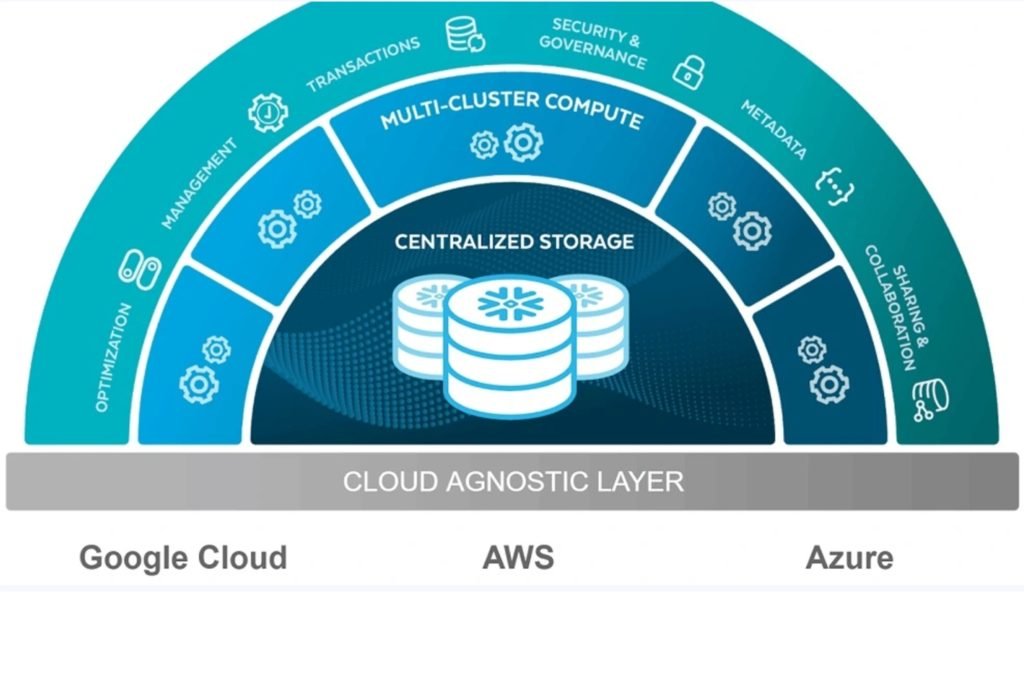
When contrasting Snowflake and Azure, it’s crucial to dig further into their core competencies in cloud data management. Snowflake’s outstanding data-sharing capabilities stand out, allowing businesses to safely communicate managed data across many groups. This capability is especially useful for firms that value data collaboration.
Furthermore, Azure is praised for its robust security and compliance, which is critical in today’s data-sensitive workplaces. Azure’s worldwide network of data centers enables high availability and disaster recovery.
Snowflake is ideal for cloud-native data warehousing and sophisticated analytics. It excels at handling massive amounts of structured and semi-structured data and is suitable for businesses seeking a modern, scalable, and high-performance data storage and processing solution.
Snowflake is ideal for cloud-native data warehousing and sophisticated analytics. It excels at handling massive amounts of structured and semi-structured data and is suitable for businesses seeking a modern, scalable, and high-performance data storage and processing solution.
Snowflake and Azure serve distinct roles in cloud computing.Snowflake is primarily a cloud-native data warehousing platform focused on data storage, processing, and analytics. It can be used alongside Azure services to meet specific data requirements. However, Snowflake is not a comprehensive solution for Azure, which provides a broader range of cloud services such as computing, artificial intelligence, IoT, and more.
The choice between Snowflake and Azure is based on specific business requirements. Organizations may use both platforms in tandem, creating a unified ecosystem that includes Snowflake for advanced data analytics and Azure for a variety of cloud computing requirements.
The expense comparisons between Snowflake and Azure can vary greatly depending on the specific usage model, workload, and configuration; Snowflake’s pricing structure is based on storage and compute resources, whereas Azure offers a variety of pricing options such as pay-as-you-go, reserved instances, and so on. Snowflake can be a more cost-effective option for data warehousing and analytics, particularly for enterprises with changing workloads.
In some circumstances, Snowflake may be less expensive for data warehousing and analytics, particularly for enterprises with variable workloads. However, Azure’s flexibility and complete portfolio of services may give a cost-benefit for enterprises that use a wide range of cloud capabilities.
Whether there is better software than Snowflake depends on your individual data management and analytics requirements. There are various options that address distinct aspects of data processing and storage.
Snowflake alternatives include Amazon Redshift, Google BigQuery, MongoDB, and Microsoft Azure Synapse Analytics, each with unique benefits and features. For example, Amazon Redshift is well-known for its data warehousing capabilities, but Google BigQuery specializes in serverless data analytics. The ideal software relies on an organization’s data volume, complexity, integration needs, and cloud provider choices.
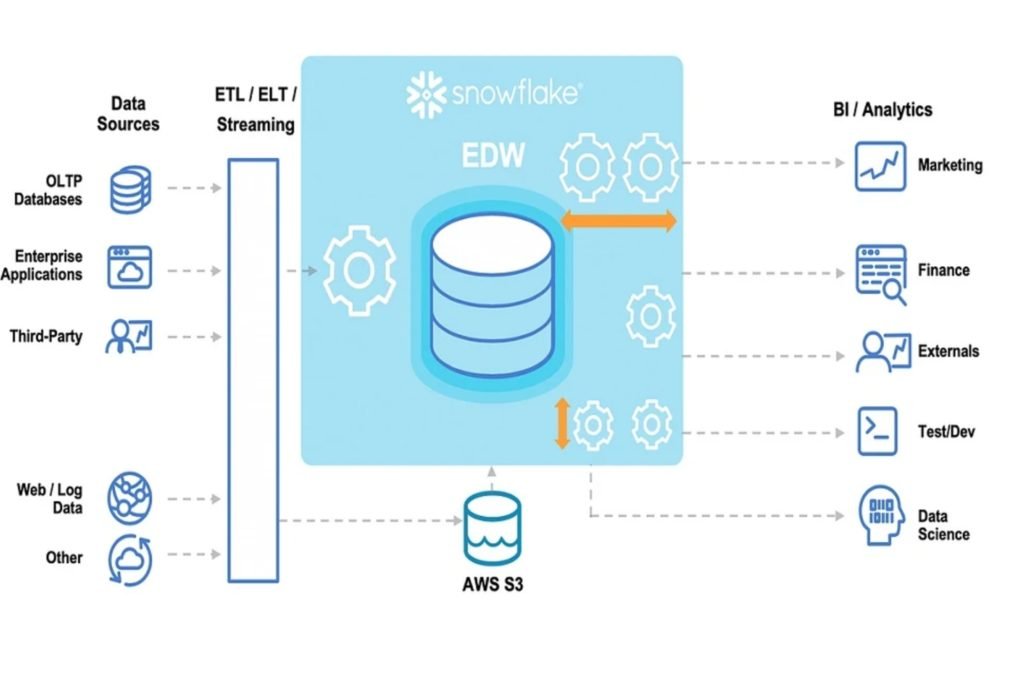
Snowflake and Azure share a common advantage in enabling business growth by providing a scalable solution for evolving data needs. The combination of Snowflake’s scalable architecture and Azure’s robust infrastructure ensures that organizations can seamlessly scale their business as data needs increase
Snowflake, for example, enables users to easily extend data warehouse capabilities by modifying storage and compute resources to match changing workloads. This scalability is especially useful for firms that have volatile or rapidly growing data volumes.
Azure extends this by allowing you to scale resources up or down based on demand. Azure’s scalability allows for a wide range of growth scenarios, including boosting virtual machine capacity, expanding cloud storage, and increasing computational power.
What distinguishes Snowflake from Azure is its superior user-friendliness. Its user-friendly online interface makes data querying and exploration simple, even for those with limited technical knowledge. Data analysts, for example, may simply write SQL queries without substantial coding experience, making the data analysis process more efficient.
Azure, on the other hand, often necessitates more technical knowledge and a steeper learning curve. This intricacy can present difficulties for teams looking for a more easy data management solution. Furthermore, Snowflake’s resource allocation capabilities enable cost-effective management, stressing its enterprise-friendly usability.
Both Snowflake and Azure provide significant integration capabilities. Azure, on the other hand, stands out for its extensive service portfolio and easy interaction with the Microsoft ecosystem, which includes Office 365 and Dynamics 365. This native connectivity facilitates workflows and data sharing, which is a significant benefit for firms that are heavily reliant on Microsoft technology. Snowflake, on the other hand, does an excellent job of adjusting to different data flows. It integrates well with ETL (Extract, Transform, Load) and ELT (Extract, Load, Transform) procedures, providing greater data management flexibility.
For instance, Snowflake seamlessly interacts with data sources from many platforms, allowing for uniform data processing and analysis. This is especially useful for firms that operate with diverse datasets and data sources, as Azure’s extensive portfolio of services provides a wide range of integration options, and Snowflake’s flexibility caters to organizations with complex data pipeline requirements. Finally, the decision between Azure and Snowflake for integration is based on an organization’s specific requirements and ecosystem.
Azure has the upper hand in data analytics. It includes a comprehensive collection of advanced analytics and machine learning capabilities that allow users to effectively process, analyze, and extract important insights from large datasets. For example, Azure Machine Learning enables companies to create, train, and deploy machine learning models for predictive analytics and data-driven decision-making.
In contrast, Snowflake provides sophisticated AI features designed to improve data classification and workflows. While these features are useful for data management and processing, Snowflake lacks the specialized analytical tools that Azure offers. This can be a crucial factor for firms looking for a comprehensive data analytics solution that includes strong machine learning capabilities.
When it comes to artificial intelligence (AI) and cognitive skills, Azure outperforms Snowflake. Azure provides a broad portfolio of AI services, like as speech recognition, picture analysis, and natural language processing, allowing enterprises to fully realize the potential of AI for a variety of applications. For example, Azure’s Computer Vision API allows for picture identification, while its Language Understanding (LUIS) service enables chatbots and voice assistants to grasp natural language.
On the other hand, Snowflake’s AI-powered features are primarily focused on workflow optimization and data classification. While useful for data management, Snowflake’s AI capabilities do not compare to Azure’s breadth and depth of AI services.
Snowflake outperforms Azure when it comes to cross-platform integration. Snowflake’s architecture is designed to work smoothly with a variety of data sources, cloud platforms, and analytical tools. This level of adaptability and interoperability enables enterprises to build unified data ecosystems across several technologies and platforms.
Snowflake, for example, can seamlessly interface with Amazon S3, Google Cloud Storage, and Azure Blob Storage, resulting in a consolidated data repository across several cloud providers. It also has native interfaces for popular BI products such as Tableau and Power BI, which streamline data visualization and analytics.
While Azure allows you to choose your programming languages, frameworks, and operating systems, it falls short of Snowflake’s vast and diverse integration capabilities. Azure’s integration capabilities are mainly focused on the Microsoft ecosystem of products and services.
Your firm demands a platform that excels at data sharing and collaboration, as well as advanced features for secure and regulated data exchange across multiple organizations.
You’re seeking a user-friendly data warehousing solution that allows for simple data querying and analysis, even by individuals with less technical knowledge, hence increasing your team’s efficiency.
Scalability is important because Snowflake’s unique architecture enables seamless scaling of data storage and computation resources, allowing it to respond quickly to changing data needs.
You require a system that seamlessly connects with a wide range of data sources and analytical tools, resulting in a dynamic and unified data ecology for various workflows.
Resource management cost-effectiveness is critical for any organization, and Snowflake’s independent storage and compute scaling helps cut costs while retaining high-performance data processing.
You require a comprehensive cloud solution that includes not only data warehousing but also computers, artificial intelligence, the Internet of Things, and a wide range of cloud services.
Advanced analytics and machine learning technologies are critical for data processing and insight production, and Azure offers a comprehensive set of these advanced capabilities.
You prioritize strong security and compliance features, as well as a worldwide infrastructure network that guarantees your data’s high availability and effective disaster recovery.
Scalability across multiple domains, from boosting virtual machine capacity to growing cloud storage, is critical to supporting a wide range of organizational development scenarios.
6 RAFFLES QUAY
Singapore
+65 80951058
sign230203@gmail.com
©2024, hfengyun. AWS Discounted Billing | AWS Partner Network